Rich Dad’s Cashflow Quadrant: Guide to Financial Freedom by Robert T. Kiyosaki is more than a book—it’s a blueprint for breaking free from the traditional financial traps that keep so many people struggling paycheck to paycheck. Through his insightful teachings, Kiyosaki challenges conventional wisdom about money and careers, showing readers how to shift their mindset and strategies to achieve true financial independence. Let’s dive into the revolutionary concepts of the Cashflow Quadrant and discover why your job might be holding you back from lasting wealth.
Understanding the Cashflow Quadrant
At the core of the book is the Cashflow Quadrant, a framework that categorises the four primary ways people earn income. Kiyosaki uses this quadrant to explain how individuals operate financially and why their approach determines their long-term success. The four quadrants are:
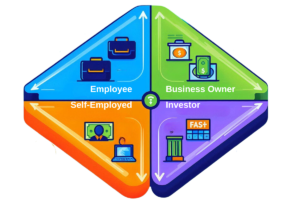
- E: Employee Employees trade their time for money. They work for someone else and rely on job security and benefits. While this approach offers stability, it often limits financial growth since their earning potential is tied to their time and effort.
- S: Self-Employed Self-employed individuals own their jobs. They work for themselves, enjoying independence but often working harder than employees. While they have more control, their income is still dependent on their personal effort.
- B: Business Owner Business owners build systems that work for them. Instead of trading time for money, they leverage teams and systems to generate income, creating scalability and financial freedom.
- I: Investor Investors put their money to work. They earn passive income from investments like stocks, real estate, and businesses, achieving true financial independence and wealth.
Why Your Job is Holding You Back
1. Limited Earning Potential
As an employee, your income is capped by your salary or hourly rate. Even with promotions or overtime, there’s a ceiling to what you can earn. This creates a dependency on external factors, such as your employer or the economy, to improve your financial situation.
2. Exchanging Time for Money
Employees trade hours for paychecks, meaning their income is directly tied to their time. If you stop working, the money stops flowing. This dependency creates financial vulnerability, as it leaves little room for building wealth outside of work.
3. False Security
Many people stay in jobs because they feel secure. However, job security is often an illusion. Layoffs, economic downturns, or company changes can jeopardise your income at any time, leaving employees financially exposed.
4. Lack of Financial Literacy
Traditional education focuses on preparing individuals for jobs, not teaching them how to build wealth. Employees are rarely taught about investments, passive income, or entrepreneurship, leaving them reliant on paychecks and unable to break the cycle.
5. Tax Disadvantages
Employees often face the highest tax burdens because their income is taxed at source. In contrast, business owners and investors benefit from tax breaks and deductions, allowing them to keep more of their earnings.
Shifting Quadrants: Breaking Free from the Employee Mindset
To escape the financial limitations of the employee quadrant, Kiyosaki encourages readers to shift to the right side of the quadrant: Business Owner and Investor. This shift requires adopting new mindsets, habits, and strategies. Here’s how:
1. Develop Financial Literacy
Educate yourself about money, investments, and wealth creation. Read books, take courses, and surround yourself with financially savvy individuals. Understanding concepts like assets, liabilities, and cash flow is the first step to making informed financial decisions.
2. Start with Small Investments
You don’t need to be wealthy to invest. Begin with affordable options like index funds, real estate crowdfunding, or dividend stocks. Over time, these investments can grow into substantial sources of passive income.
3. Build a Scalable Business
If you’re self-employed, focus on creating a business model that doesn’t rely solely on your effort. Automation, systems, and hiring the right team can help you transition from owning a job to owning a business.
4. Leverage Other People’s Time and Money
Successful business owners and investors understand the power of leverage. By using resources like employees, partnerships, or borrowed capital, you can amplify your earning potential and achieve financial freedom faster.
5. Create Multiple Streams of Income
Relying on a single source of income is risky. Diversify your earnings through investments, side businesses, or royalties. Multiple streams of income provide stability and accelerate wealth-building.
6. Adopt a Long-Term Mindset
Building wealth requires patience and persistence. Focus on strategies that yield long-term results, such as investing in appreciating assets or building a business with sustainable growth.
7. Challenge Traditional Beliefs About Money
Let go of outdated notions like “Get a good job and work hard.” Instead, adopt a mindset that prioritises financial independence, passive income, and wealth-building opportunities.
Practical Steps to Transition
1. Assess Your Current Financial Situation
Identify where you are in the quadrant and where you want to be. This clarity will guide your next steps.
2. Build an Emergency Fund
Before taking risks, ensure financial stability by saving at least six months’ worth of living expenses.
3. Reduce Debt
Minimise liabilities that drain your resources, such as credit card debt or loans. Redirect those funds into income-generating assets.
4. Start Networking
Connect with individuals who share your financial goals. Networking can lead to new opportunities, partnerships, and insights
.
5. Take Action
Don’t wait for the perfect moment to start. Begin with small steps, whether it’s investing a small amount or launching a side hustle. Progress builds momentum.
📚 Grab the Book & Support the Blog post
Looking to dive deeper into the book we featured? You can purchase it through our Amazon affiliate link — it won’t cost you anything extra, but it helps support the Mind Set In Stone podcast so we can keep bringing you inspiring content. Thank you for your support!
Final Thoughts
Rich Dad’s Cashflow Quadrant offers a fresh perspective on earning, saving, and investing money.
It challenges the traditional belief that job security equals financial security, encouraging readers to pursue financial independence through business ownership and investments.
By shifting your mindset and strategies, you can break free from the limitations of the employee quadrant and design a life of abundance and freedom.
The journey requires effort and education, but the rewards are life-changing. Are you ready to make the leap?
Unlock the secrets to financial freedom by diving into our latest podcast episode, where we break down Robert T. Kiyosaki’s revolutionary Cashflow Quadrant. Whether you’re an Employee, Self-Employed, Business Owner, or Investor, this episode reveals the mindset shifts and strategies needed to transition to the wealth-building side of the quadrant. Packed with actionable insights, relatable stories, and expert analysis, this is your chance to gain clarity on your financial path and take the next step toward achieving the life you’ve always dreamed of. Don’t miss it—your financial future starts here!